Frequently Asked Questions About Hearing & Hearing Treatment
Yes, it could be.
Hearing difficulties often show up as fatigue, headaches, poor concentration, irritability, or avoiding social situations, rather than obvious hearing loss. Straining to listen places extra demand on the brain, which can lead to tiredness and stress. A comprehensive hearing assessment can help determine whether hearing is contributing to these symptoms.
You may benefit from a hearing test if you:
- Struggle to hear conversations in noise
- Frequently ask people to repeat themselves
- Feel tired after meetings or social gatherings
- Notice ringing or buzzing in your ears
- Feel others are “mumbling”
- Have difficulty following conversations on the phone or TV
Even mild hearing loss can have a significant impact. Early assessment leads to better long-term outcomes.
Not necessarily.
A hearing test does not automatically mean hearing aids.
Depending on the results, recommendations may include:
- Monitoring your hearing over time
- Medical referral to an ENT or physician
- Communication strategies or hearing protection
- Tinnitus support
- Hearing treatment with hearing aids and rehabilitation
Our role is to guide you to what is clinically appropriate, not to sell devices.
Hearing loss can result from many factors, including:
- Age-related changes
- Noise exposure
- Genetics
- Medical conditions
- Infections
- Certain medications
Often, hearing loss develops gradually, which is why people may not notice it immediately. A comprehensive assessment helps identify the type and cause of hearing difficulty.
A hearing test should be carried out by a qualified audiologist using calibrated equipment in a sound-treated environment.
At SNR Hearing, assessments are:
- Comprehensive and unhurried
- Performed in a sound-treated booth
- Designed to assess both hearing ability and real-world communication
This ensures accurate diagnosis and meaningful recommendations.
Yes — when hearing aids are correctly selected, professionally programmed and supported.
Hearing aids work best as part of a complete hearing treatment programme, which includes:
- Accurate assessment
- Personalised fitting and verification
- Rehabilitation and counselling
- Ongoing follow-up and support
When done properly, hearing aids can significantly improve communication, confidence and quality of life.
We strongly advise caution.
Hearing aids are medical devices that must be:
- Matched to your hearing loss
- Programmed based on precise measurements
- Verified for safety and effectiveness
Devices bought online or through magazines are often not customised, not verifiable, and not supported long term. In many cases, we are unable to programme or safely support devices that do not meet professional and technical standards.
There is no single “best” hearing aid brand.
The best hearing aid is the one that:
- Matches your hearing needs
- Suits your lifestyle
- Can be properly programmed
- Can be fully supported, serviced and repaired over time
Technology choice should always be guided by clinical need and long-term support, not marketing claims.
The cost of hearing aids reflects far more than the device itself.
Hearing treatment includes:
- Comprehensive assessment
- Professional fitting and verification
- Rehabilitation and counselling
- Follow-up appointments and fine-tuning
- Technical support and aftercare
- Warranty and servicing
You are investing in long-term hearing outcomes and quality of life, not just a product.
Over-the-counter (OTC) hearing devices may seem convenient, but they are not suitable for everyone and do not replace comprehensive hearing care.
OTC devices:
- Are designed only for mild, perceived hearing difficulties
- Do not include a full diagnostic hearing assessment
- Are not customised to your hearing profile
- Are not verified for safety, comfort or effectiveness
- Do not include rehabilitation, counselling or aftercare
While some people may notice limited benefit, outcomes are consistently far better when hearing care follows evidence-based, comprehensive best-practice protocols.
At SNR Hearing, we regularly see patients who have tried OTC devices without success and later achieve significantly better results through a structured, professional hearing treatment programme.
Hearing loss is complex, and treating it properly requires more than amplification alone.
Real Ear Measurement is a gold-standard verification method used to check how a hearing aid is performing inside your ear, not just in a computer simulation.
Because every ear is shaped differently, the same hearing aid can sound very different from one person to another.
Real Ear Measurement allows your audiologist to:
- Measure the actual sound reaching your eardrum
- Ensure speech sounds are clear and comfortable
- Confirm that the hearing aid is neither under- nor over-amplifying
- Adjust settings precisely for your individual ear acoustics
Without Real Ear Measurement, hearing aid fitting becomes guesswork.
Evidence consistently shows that hearing aids fitted and verified using Real Ear Measurements deliver better speech understanding, greater comfort and improved long-term satisfaction.
Important Advice – Please Read
Never buy hearing aids without a proper hearing assessment.
Hearing aids must be:
- Individually designed or selected
- Professionally programmed
- Verified to ensure safe and effective performance
Many people waste money on cheap, non-customised devices that offer little benefit and may discourage them from seeking proper care later.
Comprehensive hearing treatment leads to better outcomes and greater satisfaction.
Still Have Questions?
If you are unsure about your hearing or would like personalised advice, we encourage you to speak to a qualified audiologist.
📞 Contact SNR Hearing to book a comprehensive hearing assessment or to discuss your concerns.
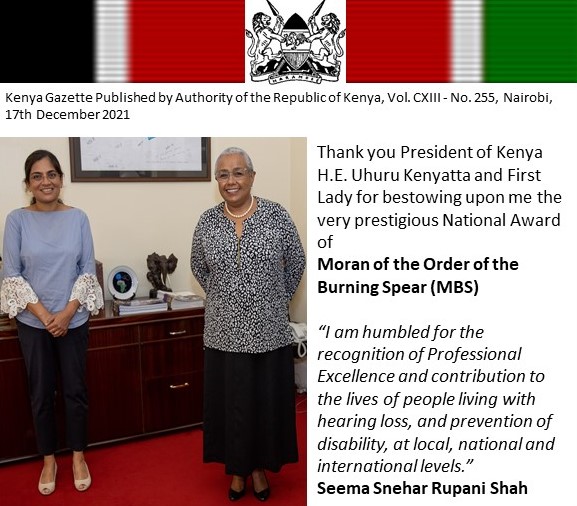
Seema has been bestowed with the prestigious Presidential National Award of Moran of the Order of the Burning Spear (Jamhuri Day Honours 2021) by HE The President Uhuru Kenyatta and The First Lady Margaret Kenyatta. She has been recognized for Clinical & Professional Excellence and contribution to the lives of people living with hearing loss, and prevention of disability, at local, national and international levels.
Testimonials
It’s aprivilege to have met you. You, like your Father who I respect so much are wonderful. May you be blessed, Uncle Moody.HON Moody Awori, Former Vice-President of Kenya
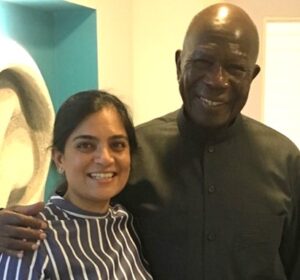
"I am delighted with my hearing aids. I can hear much better at board meetings. I realized how many birds there were outside my home in the morning. The TV volume came down too."Mr John Golds
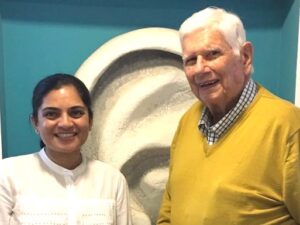
"I would strongly recommend my friends and relatives to attend this clinic. Seema and her staff are absolutely thorough and encouraging!"Nirmala Chauhan
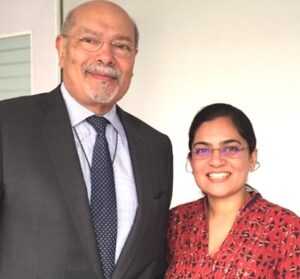
"Fantastic! And thank you for being in Kenya (I can truly say I can work because of you)"Dr Aziz Bhaloo, HE Aga Khan’s Former Representative to Kenya
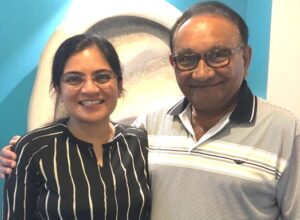
By using the hearing aids provided by Ms. Seema Shah, my general everyday life and activities has improved a lot & I feel more confident in my approach with people whether at meetings or other gatherings.
Thank you very much Seema. You are a wonderful person.
Mr Rajni Shah
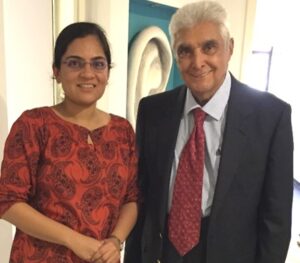
Dear Seema,
Had the pleasure to meet your dad today. A delightful man who has served humanity for over 35years. I told him he must be very proud of you since you are also making a difference to people's lives. May God bless you!!Mr Zool Nimji
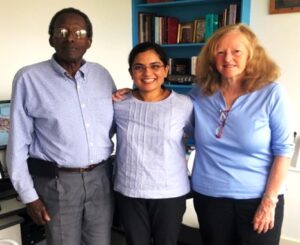
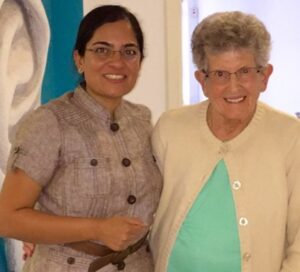
Seema with Professor and Mrs Ole-Moiyoi
I must say it’s a real pleasure coming here. Very Professional and very competent and confident.
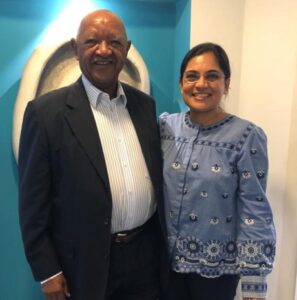
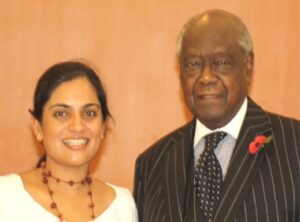
Mr Nick Paterson (left) with former Kenyan Ambassador to the United States Hon. Leaonard Kibinge (centre)

Seema Shah with David Mutiso (the first architect in Kenya, town planner and designer of the Kenya International Conference Centre)
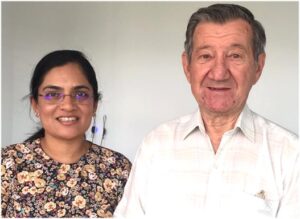
Seema with Late Charles Szlapak, the Former Owner of Fairview Hotel
Today I could have a meeting in windswept Karura without any problems. I am getting along famously. Thank You.
Cristina Boelcke, Vice Chair of Karura Forest
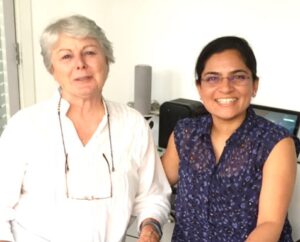
Seema Rupani Shah's concern for my wellbeing, for having me get the very best possible solution to my beginnings of a hearing challenge, was overwhelming. She just couldn’t do enough to make me feel comfortable, to help me understand every step she was taking, to encourage me to get in touch any time I needed further assistance, to deliver optimal value for money.
Mike Eldon, Chairman of Management Consultancy The DEPOT, and co-founder of the Institute for Responsible Leadership

Thank You for all that you do for our ears.
You are our miracle girl – Mrs Margaret Charles Njonjo
HON Sir Charles Njonjo, Former Attorney General of Kenya
Seema with HE the Late Daniel Arap Moi, Former President of Kenya
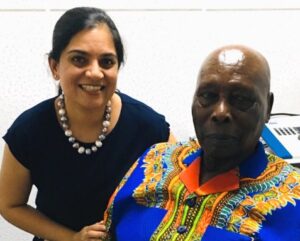
The family of former President Moi would like to take this opportunity to express our utmost gratitude for the love and respect you have showed Mzee and our family during Mzee’s hospitalization. Your care for his well being comforted us and kept us strong until his final moment.
May God bless you mightily
Thank you
AsanteHon Raymond K Moi
Hearing aids have definitely helped me. I can hear the birds again. And I do hear people who mumble much better now.
Ulf Aschan
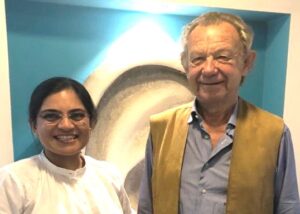
You are special Seema.
Ruth Rabb
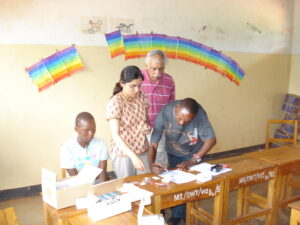 PRESIDENTS, PAUPERS, POACHERS AND THE PICCOLO – A DAY AT WORK IN KENYA
An article by Seema Shah published in the Canadian Audiologist
Seema’s interview with Crossover on the importance of addressing hearing difficulties and why she is so passionate about her work.
 THE GREAT CUSTOMER SERVICE
An Article published in the Business Daily highlighting our efficient and quality services